Get the daily infection newsletter by email
Free, every morning. Unsubscribe any time.
FRCPath Medical Microbiology exam guidance
Practical help for Part 1 and Part 2, with curated resources, exam tips, and structured learning pathways.
If you want to know more about the exam, click on the buttons below. This is based on my 12 years of experience supporting trainees in the UK and guiding numerous overseas trainees.
If you want more guided education, go to microregistrar.moodlecloud.com
Microregistrar.moodlecloud.com
Microregistrar began in 2012 as a note-taking site for a microbiology registrar and has since grown into a structured learning platform for FRCPath Medical Microbiology candidates. What could be the next stage? Build a more comprehensive learning platform. Microregistrar moodlecloud was started in 2022 to provide exam-focused reading material and questions in one place.
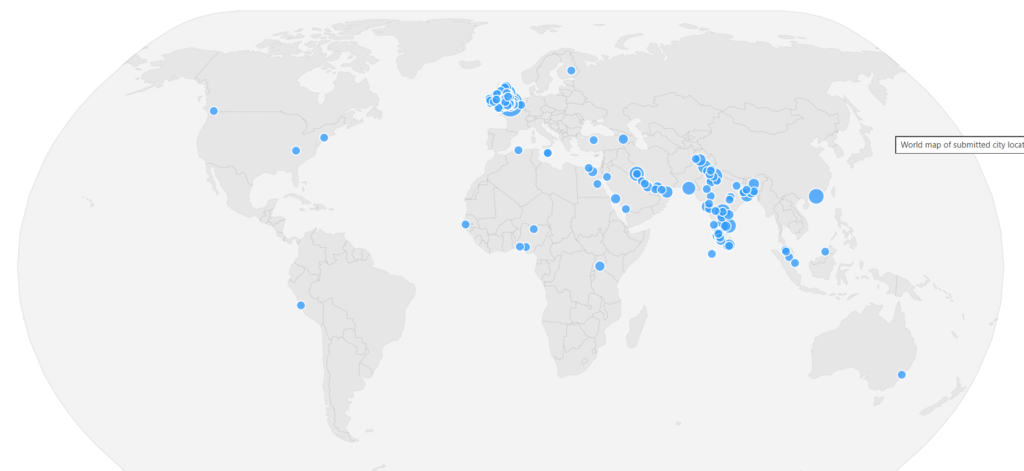
Built from my experience as a consultant microbiologist and educational supervisor, Microregistrar MoodleCloud have supported more than 500 trainees from over 29 countries, with around 30 candidates from the group passing FRCPath Microbiology in autumn 2025. You can find more about it here –
Daily newsletter
Microregistrar Infection NewsletterMicroregistrar Infection Newsletter · Wednesday 14 October 2026
MHRA: on CRRT, give echinocandins at least 6 hours after starting or changing the filter, where possible.
MHRA Device Safety Information DSI/2026/014 (13 Oct) warns that caspofungin and other echinocandins can bind to new polyacrylonitrile (PAN) filter membranes during continuous renal replacement therapy, which may make antifungal treatment ineffective. Where possible, give the echinocandin ≥6 hours after CRRT starts or after a filter circuit change, but don’t delay or pause CRRT just to give the drug. Think of filter adsorption when a patient on CRRT isn’t responding, and update local ICU and pharmacy protocols. Elsewhere, the DRC’s own SitRep 150 reports 9,066 / 4,381, ahead of WHO and ECDC.
19New journal items, from 9 journals1New on Microregistrar Moodle3/9Watched pages with something new37Source links in this issue1New MHRA safety alert (DSI/2026/014)3Coverage gaps we could not closeCounted from today’s digest. New journal items are the ones listed as new in the Journals tab (3 Lancet Infect Dis, 3 J Infect, 3 J Hosp Infect, 3 CMI, 2 ARIC, 2 ICHE, 1 J Clin Microbiol, 1 Lancet Microbe, 1 IJID); the four new EID articles are on the Agencies tab under CDC and aren’t counted here. Links are unique content links across the issue, not counting our two website links. Gaps come from the Coverage gaps list. Today’s digest has no sources checklist, so there’s no checks card.
Also today
The other headlines from today’s issue. Each one links through to the full summary. In the UK, the flu/COVID week 42 report and the England measles update are both due tomorrow (15 Oct), and UKHSA added catch-up resources to the MMRV programme collection.
Microregistrar Moodle · 1 newNew on Microregistrar Moodle
Interactive HYN: Viral syndromes (13 Oct 2026).
Ebola · DRC SitRep 150DRC: 9,066 confirmed, 4,381 deaths
The Ministry of Health’s SitRep 150 (data to 11 Oct, published 13 Oct): CFR 48.3%, +88 cases and +45 confirmed deaths in 24 h. Test positivity rose to 20.8% and contact follow-up fell to 79.5% (target 95%).
Not yet confirmed by WHO or ECDC: ECDC still shows 8,978 / 4,336, and WHO’s latest Ebola DON is DON619.
Lancet Infect Dis · Ebola vaccineErvebo T cells recognise Bundibugyo
One dose of Ervebo, the licensed Zaire Ebola vaccine, produced T cells that also recognise Bundibugyo virus in 13 of 20 recipients. CEPI says the Tumaini phase 2/3 trial is in final preparation.
This doesn’t show clinical protection.
J Infect · watchedThird-generation-cephalosporin-resistant N. meningitidis in China
Adds to earlier Chinese reports of cefotaxime-resistant meningococci with commensal-derived penA alleles. Relevant to empirical ceftriaxone/cefotaxime for meningitis in returning travellers.
Title-level only; abstract not retrieved.
CDC · EIDFour new infection articles
MERS-CoV genomics and serology, H5 bird flu antibodies in Greenland polar bears, and SSPE after measles in the Philippines. No new HAN or infection press release.
Watch · Irkutsk · unchangedDON620 is still the latest
No plague.
Still not confirmed: the cause of death remains undetermined.
What we could not confirm
The new DRC figures come from the Ministry of Health’s SitRep 150 and haven’t been confirmed by WHO or ECDC yet. On Irkutsk, the cause of death is still undetermined. We couldn’t re-verify US measles. Several journal pages were blocked, so many items are title-level only, and the Ervebo T-cell details come from the DZIF press release and preprint rather than the paper itself.
Microregistrar Moodle update
New on Microregistrar Moodle since our last issue: one item.
New · 13 Oct 2026 Interactive HYN: Viral syndromes
An interactive teaching item. There’s no further description on the sheet.
The full list is in the Microregistrar moodlecloud sheet ›
Watched pages
We check nine pages every morning for anything new, compared with what we saw last time (checked 14 Oct 2026 08:10 BST; all 9 were reachable). Three have something new: the Journal of Infection, J Hosp Infect, and a minor UKHSA collection update. The other six were quiet, including RCPath exams.
Health Protection Report (UKHSA)
No changeNo new reports (still volume 20 issue 9, 24 Sep).
UK SMI News (RCPath)
No changeNo new items.
RCPath Examinations
No changeNo new exam news.
Green Book
No changeNo new or updated chapters.
UKHSA organisation page (GOV.UK)
NEW13 Oct — MMRV vaccination programme collection: catch-up resources added. Nothing else meaningful; the other changes were corrections and administrative updates.
NICE published guidance
No changeNo new infection or antimicrobial items.
Journal of Antimicrobial Chemotherapy
No changeNo new items.
Journal of Infection
NEW
- 13 Oct: The emergence and spread of third-generation cephalosporin-resistant Neisseria meningitidis in China. Summarised in the Journals tab. Article › · doi:10.1016/j.jinf.2026.106879 ›
- 13 Oct: Genomic surveillance-guided phage repository construction and rational cocktail design for carbapenem-resistant Klebsiella pneumoniae (title only). Article › · doi:10.1016/j.jinf.2026.106882 ›
- 13 Oct: Conversion of the cryptococcal antigen lateral flow assay (CrAg LFA) to negative in HIV-negative cryptococcal meningitis (title only). Useful for the question of whether serial CrAg helps monitoring. Article ›
Journal of Hospital Infection
NEW
- 13 Oct: Moral experiences of MDRO carriers in Dutch hospitals and nursing homes (qualitative study; title only). Article › · doi:10.1016/j.jhin.2026.10.002 ›
- 13 Oct: Earthquake mass-casualty burden, hospital microbial ecology and surgical site infection after elective orthopaedic surgery (retrospective cohort; title only). Article › · doi:10.1016/j.jhin.2026.09.030 ›
- 13 Oct: Bacterial signatures in dental clinic bioaerosols (title only). Article › · doi:10.1016/j.jhin.2026.10.003 ›
Agencies & guidance
MHRA’s CRRT and echinocandin alert is today’s practice change for ICU, pharmacy and microbiology/mycology teams. The DRC’s own Ebola figures have moved ahead of WHO and ECDC again.
Guidance changes
MHRA · DSI/2026/014 · safety alert · new CRRT: consider delayed administration of concurrent echinocandins, such as caspofungin (13 Oct)
- Caspofungin can adsorb onto PAN-based CRRT membranes, with the greatest risk when a new membrane or circuit starts; adsorption falls as the membrane saturates. The same risk can’t be excluded for other membrane types or similar drugs.
- Where possible, give echinocandins ≥6 hours after CRRT initiation and after routine filter set changes. CRRT should go ahead as clinically indicated and shouldn’t be delayed or paused just to give the drug.
- Consider filter adsorption in treatment non-responders on CRRT, and seek specialist pharmacist, ID, microbiology or mycology input if you’re worried about loss of efficacy.
- Update local protocols and SOPs. The EU PRAC advised avoiding PAN membranes or using another antifungal; MHRA judged that not feasible in the UK.
Other guidance No other changes
No new UK SMI, Green Book, NICE infection guidance or EUCAST changes found.
UKHSA / England
UKHSA · flu/COVID-19 · unchanged Week 42 is due tomorrow
Week 41 (8 Oct) is still the latest: hospital flu PCR positivity 6.5%, COVID-19 9.1%, RSV at baseline. The week 42 report is due on 15 Oct.
UKHSA · notifiable diseases · week 41 Causative agents: week 41 added
Week 41 lab report data were added on 13 Oct.
UKHSA · unchanged Everything else
Outbreaks under monitoring is still at week 40. Measles in England: 1,003 lab-confirmed cases (1 Jan–14 Sep), next update due 15 Oct. The MMRV programme collection gained catch-up resources (13 Oct).
ECDC
ECDC · unchanged Ebola page unchanged since 12 Oct 13:35
8,978 confirmed / 4,336 deaths (data to 10 Oct); the DRC’s own SitRep 150 is newer. ECDC rates the import risk to the EU/EEA as very low. The CDTR is still week 41 (9 Oct), with the next normally on Friday. No new ECDC news items or risk assessments since 12 Oct; Eurosurveillance’s next issue is due on 15 Oct.
Global — Ebola (Bundibugyo)
DRC Ministry of Health · SitRep 150 · new DRC: 9,066 confirmed, 4,381 deaths (data to 11 Oct; report 12 Oct, published 13 Oct)
CFR 48.3%; 895 in isolation; 2,389 recovered. In the last 24 h: +88 cases (Ituri 56, Nord-Kivu 28, Haut-Uélé 4; none in Tshopo, Sud-Kivu, Bas-Uélé or Sud-Ubangi), up from +64 the day before, and 45 confirmed deaths (37 in the community and 8 in treatment centres; community deaths were up from 13).
Test positivity 20.8% (14.4% the day before). Contact follow-up 79.5% (81.0% the day before; target 95%): 5,531 of 27,043 contacts weren’t seen, worst in Nord-Kivu (76.9%).
Ituri 6,695 (3,099)Nord-Kivu 1,911 (1,092)Haut-Uélé 383 (162)Tshopo 59 (22)Bas-Uélé 13 (4)Sud-Kivu 3 (1)Sud-Ubangi 2 (1)Nord-Kivu has the highest CFR (57.1%). 65 of 167 health zones have ever been affected, and 57 are currently affected. 269 frontline health workers have been infected so far. In Haut-Uélé, 399 of 858 pre-registered frontline workers have been vaccinated (46.5%). Nord-Kivu treatment centres are at 88.2% occupancy.
Not yet confirmed by WHO or ECDC: these are the DRC Ministry of Health’s own figures. ECDC still shows 8,978 / 4,336, and WHO’s latest Ebola DON is DON619.
CEPI · vaccine trial Tumaini phase 2/3 trial in final preparation
CEPI says final preparations are under way for Tumaini, a phase 2/3 trial of Bundibugyo vaccine candidates. It’s expected in the coming weeks, pending approvals, and will likely test Ervebo first.
Reported by a news agency (Xinhua, 13 Oct), not a CEPI statement we’ve seen directly.
Uganda · Kenya · unchanged No change
Uganda: 20 cases (outbreak declared over on 25 Aug). Kenya: one imported fatal case, with 108 of 122 contacts in quarantine and no symptoms (11 Oct).
WHO
Watch · Irkutsk · unchanged DON620 is still the latest
DON620 (Irkutsk, 10 Oct) is still the latest DON, and there’s no Ebola DON after DON619 (8 Oct). No plague.
Not confirmed: the cause of death is still undetermined.
CDC / US
CDC · EID · early release Four new infection articles (13 Oct)
- SSPE after measles outbreaks, the Philippines, 2007–22: 20 children with SSPE at a Quezon City hospital; median age 6.2 years at admission and 0.7 years at measles. A quarter of admissions were in 2022, and 4 were infected in the 2018–19 outbreak, so more cases are likely in coming years. A reminder that measles outbreaks have a long tail. EID ›
- Global genomic surveillance of MERS-CoV: 807 genomes (2012–24), mostly from Saudi Arabia and the UAE. There are big gaps in Africa and South/Central Asia, and long delays between sampling and sequence release. EID ›
- MERS-CoV serology and SARS-CoV-2 cross-reactivity, the Netherlands: SARS-CoV-2 exposure induces MERS-CoV antibodies (mainly to the conserved S2 domain). Combining S1 binding with neutralisation limits false positives. Relevant when interpreting MERS serology in returning Hajj/Umrah pilgrims. EID ›
- HPAI H5 exposure in East Greenland polar bears: influenza A antibodies in 3/14 (2024) and 6/14 (2025) bears; 4 from 2025 had antibodies to H5 clade 2.3.4.4b. EID ›
CDC · quiet HAN, newsroom and MMWR
No new health advisory (the latest infection HAN is still the rabies PEP advisory, 10 Sep). No October infection press releases (latest item 22 Sep). The 13 Oct MMWR was a Youth Risk Behavior Survey supplement (mental health, diet, substance use); the last infection item is still the botulinum toxin medical spa report (8 Oct).
CDC · measles · not re-verified 4,080 US cases (as of 8 Oct)
We couldn’t re-verify this today because the CDC page refused our access; the weekly update usually comes on Wednesdays.
CDC · travel health notices · unchanged Travel notices
Level 4 Ebola in Ituri and Nord-Kivu; Level 3 in Haut-Uélé and Tshopo; Level 2 for other DRC/Uganda areas and global polio; Level 1 global dengue.
Journals
Nineteen new items from nine journals, including six from our watched Journal of Infection and J Hosp Infect pages. Many are title-level only today because publisher pages were blocked.
Lancet Infectious Diseases — new
Lancet Infect Dis · Ebola vaccine Ervebo (rVSVΔG-ZEBOV-GP) induces T cells that cross-react with Bundibugyo virus (BDBV)
20 vaccine recipients from an earlier trial, tested 28 days after one dose: 16/20 had T cells against the Zaire Ebola glycoprotein, 13/20 against BDBV and 7/20 against Sudan virus. Responses targeted conserved glycoprotein regions. It’s the first human evidence of T-cell cross-reactivity, adding to earlier antibody data.
Takeaway: it doesn’t show clinical protection, but it supports efficacy trials of Ervebo in the current outbreak.
Details come from the DZIF summary and the medRxiv preprint, not the paper itself.
Lancet Infect Dis · review · exam-relevant Daptomycin for enterococcal bloodstream infection and endocarditis: reconciling clinical evidence, susceptibility testing and regulatory frameworks
Title-level only; abstract not retrieved.
Lancet Infect Dis · RSV NIRSE-GAL: second-season observations after nirsevimab
Title-level only; abstract not retrieved.
Journal of Infection and J Hosp Infect — new on our watched pages
J Infect · meningococcus · watched Third-generation cephalosporin-resistant N. meningitidis in China
Background from earlier work: cefotaxime-resistant meningococci in China have picked up mosaic penA alleles (such as penA795) from commensal Neisseria, and a cefotaxime- and ciprofloxacin-resistant serogroup Y cc23 clone (ST-18108) was described earlier this year.
Takeaway: keep this in mind for imported invasive meningococcal disease, and for chemoprophylaxis choice if ciprofloxacin resistance is present.
Title-level only today; abstract not retrieved.
J Infect · phage · watched Phage cocktails for carbapenem-resistant K. pneumoniae
Title-level only; links on the Watched pages tab.
J Infect · cryptococcus · watched CrAg LFA conversion in HIV-negative cryptococcal meningitis
Title-level only; links on the Watched pages tab.
J Hosp Infect · watched Three new papers
Moral experiences of MDRO carriers in Dutch hospitals and nursing homes; earthquake mass-casualty burden and surgical site infection after elective orthopaedic surgery; and bacterial signatures in dental clinic bioaerosols.
Title-level only; links on the Watched pages tab.
ARIC — new
ARIC · IPC · genomics Airborne multidrug-resistant Staphylococcus epidermidis (MDRSE) in hospital wards
Takeaway: in a Swedish prospective genomic study, airborne MDRSE was found on 50% of sampling days in ICU rooms and 71% in a trauma orthopaedic ward, but not in theatre corridors or the neonatal unit. 17% of orthopaedic patients were colonised, and no healthcare workers were. In 4 of 5 colonised patients with airborne MDRSE in their room, air and skin isolates differed by 0–9 SNPs, and 99.6% of isolates were hospital lineages ST2/ST215. Air may help keep MDRSE circulating on wards with device-associated infection risk.
ARIC · IPC policy Nail polish remains inappropriate in clinical care (narrative review)
Takeaway: the authors argue the recent lab studies used to relax nail-polish rules have methodological problems, and that practical problems (you can’t see nail length or cleanliness, and policing is hard) make polish unacceptable. Relevant to local IPC policy debates.
ICHE and J Clin Microbiol — new
ICHE · water · NTM NTM in CDC’s water-related healthcare outbreak consultations, 2018–24
Takeaway: of 639 water-related investigations, 66 (10.3%) involved NTM (15 species). Nearly half were M. abscessus, two-thirds were extrapulmonary only, 56% were in hospitals, and exposures were mostly surgery (41%) and medical products (53%). Keep non-sterile water away from surgery, devices and medicine preparation.
ICHE · point prevalence HCAIs in Singapore’s community hospitals: first national point prevalence survey
Takeaway: prevalence 5.6% (86 of 1,546 patients), mainly unspecified sepsis, UTI and surgical site infection.
JCM · AST · mini-review Evaluating AST devices across CLSI, EUCAST, ISO, FDA and EU IVDR frameworks
Takeaway: performance criteria (essential and categorical agreement, error rates, bias) vary between standards bodies and regulators, which affects how breakpoints are applied, especially in low- and middle-income settings. Good background for verifying AST methods.
CMI, Lancet Microbe and IJID — title-level
CMI · candiduria “How do I manage candiduria?” 2026 algorithms
Title-level only.
CMI · MRSA Clonal outbreak of mecC-MRSA carriage linked to phage-acquired immune evasion cluster genes
Title-level only.
CMI · AI Six large language models answering pre-analytical microbiology questions
Title-level only.
Lancet Microbe · RSV vaccine Live-attenuated intranasal RSV vaccine in children aged 6–18 months
Title-level only.
IJID · sepsis Cognitive impairment in sepsis survivors (meta-analysis)
Title-level only.
On X
One search of the UKHSA, ECDC, WHO, CDC, WHO Director-General and CDC Director accounts (from 13 Oct).
No breaking infection signals. WHO posts covered the Eastern Mediterranean Regional Committee, famine risk in Sudan and a new “Together for Science and Health” initiative.
What we could not confirm
We want you to know exactly where today’s issue has limits, so here are the 3 sources we had trouble with and what went wrong.
Source Issue CDC The measles data page refused our access, so US measles wasn’t re-verified. HAN status came from web search; MMWR and the newsroom from CDC’s syndication feeds; EID and travel notices from their feeds. Journals Elsevier sites (Lancet, J Infect, CMI, J Hosp Infect) were blocked, and the new papers aren’t in Europe PMC yet. No abstracts for the J Infect, Lancet ID (daptomycin, NIRSE-GAL), CMI, JHI and Lancet Microbe items; the Ervebo T-cell details came from the DZIF press release and preprint. No new NEJM, JAC, JAC-AMR or Eurosurveillance items in the window (Eurosurveillance due 15 Oct). UKHSA Week 42 flu/COVID and England measles are due on 15 Oct; the week 41 Outbreaks under monitoring chapter isn’t published yet. Sources
Today’s digest doesn’t include a sources checklist, so we can’t show ticked and open checks this time. These are the sources it draws on, as described in the issue.
- Watched pages (9 pages, all reachable, checked 14 Oct 08:10 BST)
- Microregistrar Moodle sheet (1 new item)
- MHRA drug and device alerts (DSI/2026/014)
- UKHSA GOV.UK: flu/COVID week 41 report, notifiable diseases week 41, Outbreaks under monitoring, measles, MMRV collection
- ECDC: Ebola outbreak page and CDTR week 41
- DRC Ministry of Health SitRep 150; WHO Disease Outbreak News (DON620 and DON619 still the latest); CEPI via Xinhua
- CDC: EID early release, syndicated MMWR, newsroom and HAN feeds, travel notices (measles page not reachable)
- Journal sweep plus watched journal feeds
- X: one search of official accounts
Recent posts
I am keen to hear from you – suggestions and also if you have any questions. If you are preparing for FRCPath Microbiology exam and wish to join the WhatsApp or Facebook group let me know. Find me on LinkedIn or X.com. Or contact me using this form –

Moodlecloud
Members