Infection associated with chronic granulomatous disease (CGD)
Introduction CGD is a rare inherited immunodeficiency disorder where the NADPH oxidase in the phagocytic cells is absent or malfunctioning. Most CGDs are inherited as X linked, while the rest are autosomal recessive. Phagocytes, like neutrophils and monocytes, in the absence of NADPH oxidase, cannot kill the ingested pathogens due to the lack of oxidative burst. As a result, […]
Ibrexafungerp: A novel antifungal
Ibrexafungerp, an enfumafungin derivative, belongs to a new family called triterpenoid antifungals.This is a new class called “-fungerp”. This antifungal class inhibits glucan synthetase required for fungal cell wall synthesis. One of the major antifungal class echinocandins also acts by this mechanism and has been used since 2001. Echinocandins, however, have poor bioavailability and are […]
Human Monkeypox
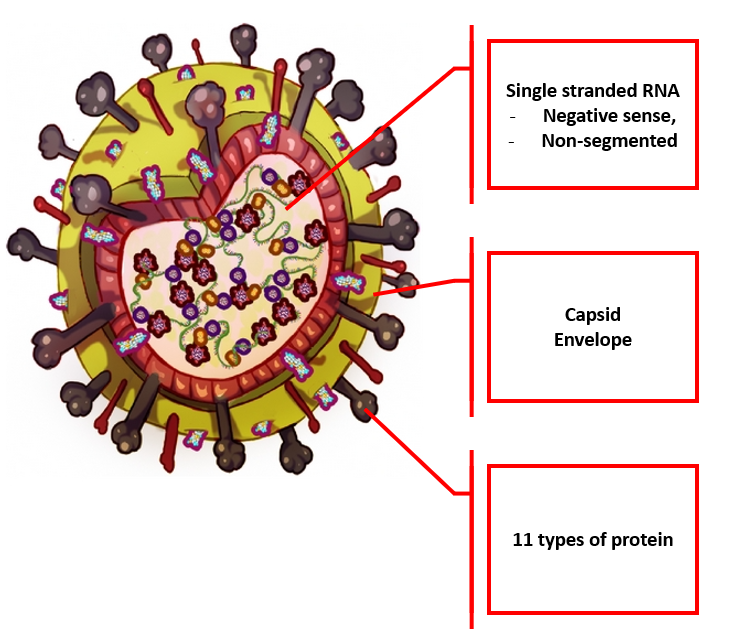
Monkeypox is an emerging disease. It was first discovered in 1958 in a captive monkey population, from which it received its name. However, monkeys are not its main reservoir. The largest natural reservoir population is rodents. The full lifecycle and the extent of the reservoir population are still unknown.Monkeypox is a zoonosis. The virus: It […]
How did I prepare for part 2 FRCPath?
One of our registrars passed part 2 recently. I asked him about his preparation. He kindly shared with me some useful tips which may help anyone preparing for part 2. What did you read? What I read was a mix of Here are the links to the resources mentioned Mandell, Douglas, and Bennett’s Principles and […]
Fusobacterium necrophorum
Bacteria Fusobacterium necrophorum is a Gram-negative, non-motile, non-spore-forming anaerobic pleomorphic bacterium. It may appear in coccobacillus or filamentous forms, which are more common in younger cultures. It is a member of the normal bacterial flora of the oropharynx, genitourinary tract, and gastrointestinal tract. Culture and identification There are 14 species of Fusobacterium, 10 of which […]
Example of short answer questions and OSPE (FRCPath Microbiology part 2)
A GP has called you about a 2-year-old girl. Her mum noticed scratch marks on the girl's face in the morning. On questioning, Mum told the GP that she noticed a bat in her room but managed to get it out of the room. She doesn't know how long the bat was there or if […]
Emergomycosis – an emerging mycosis
Emergomycosis is a systemic fungal mycosis caused by a novel dimorphic fungi called Emergomyces species. It is mainly seen in immunocompromised patients. The first case of Emergomycosis was identified in 1994 in Italy; however, the fungus was described in 1998. Disseminated Emergomycosis observed a case fatality rate of 48%. These fungi were initially classified as […]
Eikenella corrodens
Bacteria: Pathogenicity: Culture and identification: Infection caused by Eikenella: Points to remember Eikenella corrodens is usually susceptible to: Non-susceptible to:
Diagnosis of vertebral osteomyelitis (VO)
Reference: JBJI review published on 27/1/2022. Read the full paper here – Maamari, J., Tande, A. J., Diehn, F., Tai, D. B. G., and Berbari, E. F.: Diagnosis of vertebral osteomyelitis, J. Bone Joint Infect., 7, 23–32, https://doi.org/10.5194/jbji-7-23-2022, 2022. Biomarkers Imaging Biopsy and Microbiology Serology Novel modalities Flow chart as shown in the above article
Culture media and composition
This is a list of some culture media and their composition. MEDIA SUPPLEMENTS TARGET ORGANISMS ABC plates Alpha-galactosidase Salmonella sp. Alkaline peptone water [pH – 8.6 ± 0.2] NaCl, peptone Enrichment of Vibrio spp. Aztreonam Blood Agar Aztreonam, blood agar base Gram-positive, especially fastidious gram-positive organisms BHI Broths Calf brain and beef heart infusion solids, peptone […]