Patients with an absent or dysfunctional spleen (AoDS) are at increased risk of infection, especially with capsulated bacteria.
What are the organisms that can cause infection in patients with AoDS?
- Streptococcus pneumoniae (commonest)
- Neisseria meningitidis
- Haemophilus influenzae type B
- Capnocytophaga canimorsus
- Bordetella holmesii
- Babesia microti
- Plasmodium falciparum
- Salmonella (in cases of sickle cell anaemia)
- Anaplasma may present with recurrent/prolonged and severe infection in AoDS
Prevention of infection – vaccines, antibiotic prophylaxis
Antibiotic
- Antibiotic prophylaxis reduces incidents of sepsis (in children) by up to 50% and mortality by up to 90%.
- However, Prophylactic antibiotics are not absolute protection against infection. Vaccines should be given in conjunction.
- Lifelong prophylaxis is recommended.
What is the risk of sepsis?
The risk of death from sepsis is 600 times more than the general population; the estimated lifetime risk of sepsis is 5%. [Lynch 1996]
When is the risk of infection highest?
– children up to 16 years of age,
– adults over 50 years of age and
– for two years post-splenectomy.
Who must be considered for lifelong prophylaxis?
– Those who have had invasive pneumococcal disease,
– those treated for splenic malignancy
– those who have received splenic irradiation or
– Those who have ongoing graft versus host disease.
Who can be considered for discontinuation of prophylaxis?
– Splenectomy following trauma can be considered for stopping prophylaxis if appropriately counselled.
– Children over 5 years of age with sickle cell disease – can be considered for stopping antibiotic if they have received pneumococcal vaccination and does not have a history of severe pneumococcal disease. Patients’ consultants should be consulted/expert opinions taken.
What are the preferred antibiotics?
Phenoxymethylpenicillin PO
- < 1 year: 62.5mg BD
- 1 – 5 years: 125 mg BD
- >5 years: 250mg BD
Amoxicillin PO (additional cover for H influenzae in children)
- 1 mo – 5 years: 125mg twice daily
- 5 – 12 years: 250mg twice daily
- 12 – 18 years: 500mg twice daily
Erythromycin PO
- 1 mo – 2 years: 125mg twice daily
- 2 – 8 years: 250mg twice daily
- > 8 years: 500mg twice daily
Other antibiotics that have been used – Azithromycin, cefalexin
An emergency rescue pack of antibiotics can be used if regular prophylaxis is not possible – Coamoxiclav, levofloxacin etc.
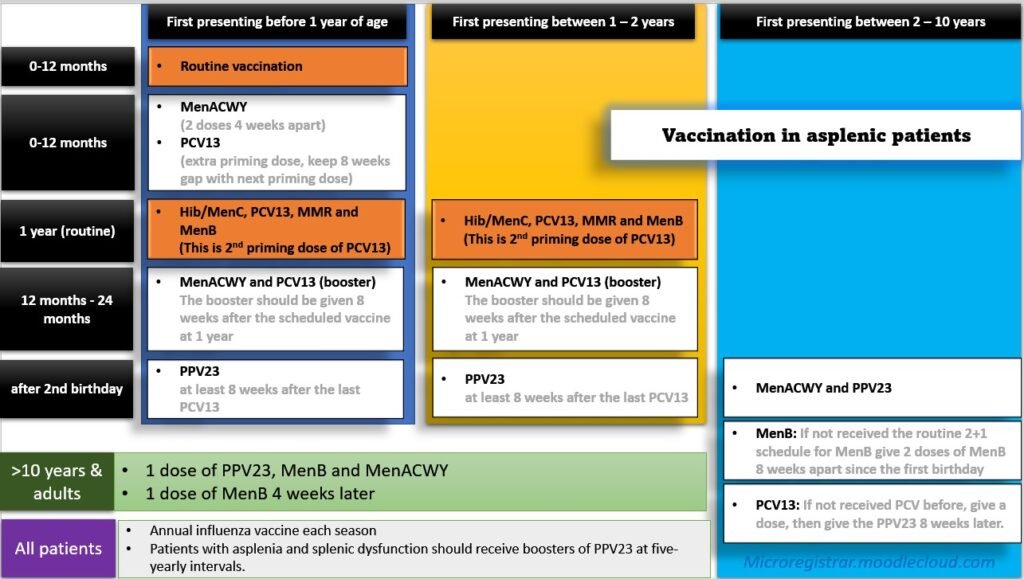
Vaccine
When should we give the vaccine?
- Elective splenectomy: vaccine should be given two weeks before splenectomy.
- Emergency splenectomy: vaccine should be given two weeks after splenectomy.
What vaccine should we give?